This is the way the beach looks and sounds on the Olympic Peninsula. My first impression, which did not change was: the Pacific isn't very pacific here! Yes, it's the same Pacific we experienced in Hawaii. But Hawaii looked like this:
 | |||||||||
| Hawaii: same Pacific, but very different! |
It won't surprise you to know that Native Americans were on the Olympic Peninsula first and got "treatied" out of the majority of their land in the usual way. There remain remnants of the fishing tribes all along the shore area of the Park, and the Park maintains a relationship with them that includes recognition of their traditional lands and practices.
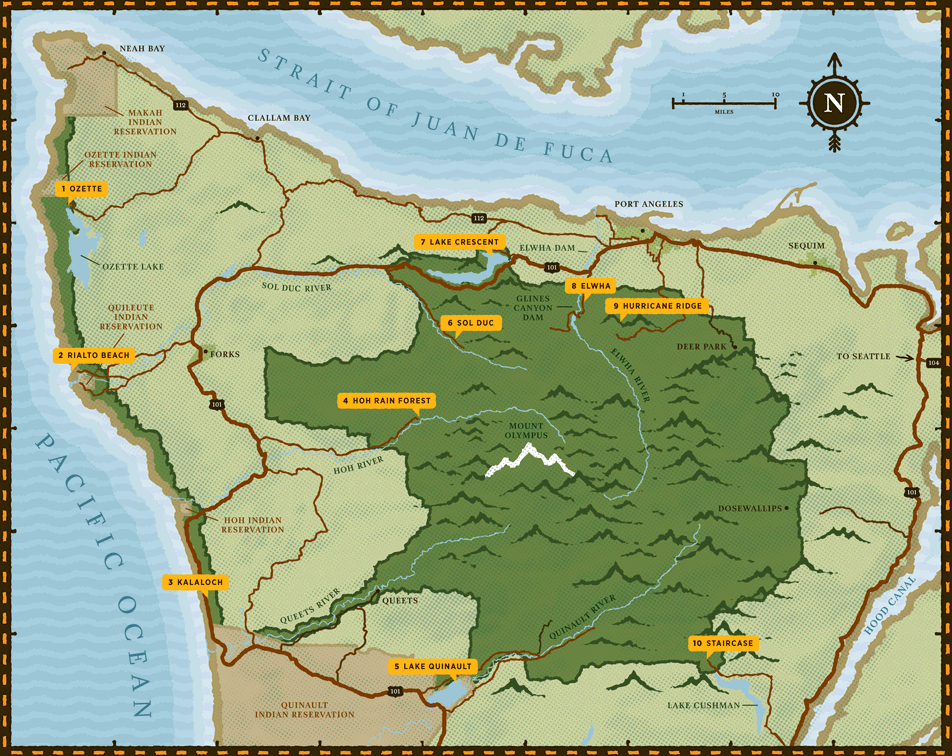
The first beach we went to, named Second Beach, is part of the Quileute reservation. The video above is from Second Beach. This photo is of The Arch, for which the beach is well known.

Ron and I had our first-ever experience with tide pools here. Scott lived in Los Angeles for many years and spent plenty of time on the beach, so he was able to open our eyes to the life we didn't even know to look for.
Sea anemones were fascinating and colorful:


All the starfish we saw were this color:

The rocks were alive with who-knows-what:

This entire rock was encrusted with layers and layers of life.

There were lots of little crabs, but they were too quick for my camera.
The next beach we visited was Rialto Beach, also part of the Quinault reservation. One of the notable qualities of all the beaches was that the drift wood was more properly called drift logs. Because the coast abuts the forest, the trees that fall are taken by the tide. They become a formidable barrier like this, and visitors are warned about the need to know the high and low tide times. During high tide, the logs become a moving cauldron, with the ability to catch and kill the unwary.

Rialto Beach. The haze was typical at all the beaches we visited. They were also chilly and windy. These were NOT bikini beaches!

Ruby Beach too is part of the Quinault Reservation. It didn't hurt our feelings to have to access the beach via this trail:

A view of Ruby Beach from the trail. You can see the piled up drift logs.

This view, as well as others you've seen, includes an island-looking formation that is called a sea stack. Sea stacks are formed through erosion. First a cave forms. When the cave washes through, an arch is left. When the arch collapses, the remaining formation is the sea stack.

Ron and Scott are making their way to the beach through the jackstraws.

Kalaloch Beach is also part of the Quinault Reservation. The sand is of a lighter color.

More tide pools here, with different life forms.

An iconic feature of this beach is variously called the Tree of Life and the Kalaloch Tree.

It's a Sitka Spruce, hanging on by its roots, with a cave underneath. If you click on the picture, you'll see Ron sitting in the cave. It's so named because despite its appearance of imminent collapse, it clings fiercely to life. No one knows how old it is.
Having lived a land-locked life and not visited this environment often, the ocean and beaches are mysterious places for me. Inscrutable, unknowable, magical, mystical, and REALLY BIG!
Next up: the Temperate Rain Forest.

No comments:
Post a Comment